

Trusted by Companies from Various Industries


Large-Scale Operational Challenges
Conventional systems limit visibility, complicate asset oversight, and slow down strategic decision-making.
Siloed Data &
Blind Spots
Data from IoT, SCADA, ERP, and sensors is scattered across multiple dashboards. Management loses single-pane visibility, delaying critical decision-making during a crisis.
The Complexity of
Asset Control
Manually managing and monitoring hundreds or even thousands of assets in a factory or mine is highly inefficient. Without accurate digital replicas, tracking daily operations is vulnerable to human error.
Reactive Operations and Inefficiency
Without predictive and simulation capabilities, management can only respond after incidents occur (from production bottlenecks to energy waste). Optimization using physical trial and error methods is highly cost-prohibitive.
An Integrated Intelligence Layer
Connecting Data to Operations
Molca goes beyond visualizing 3D models. Our platform delivers three pillars of comprehensive intelligence capabilities:
Monitor
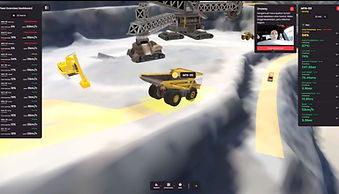
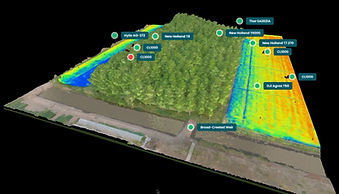
Real-time digital replica that breaks down data silos and simplifies daily control of hundreds of assets in a single pane of glass.
Predict
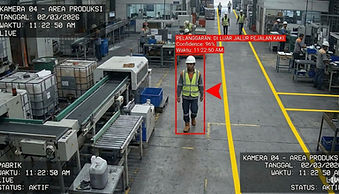
AI-based predictive analytics to catch anomalies in work equipment before they trigger system failures and downtime.
Simulate
Simulation engine to safely design new asset layouts and validate business decision scenarios without physical risk.

Specific Solutions For Your Industry
The Molca platform adapts specifically to the ecosystem and
asset types in the field.
MANUFACTURING
Smart Factory & Predictive Maintenance
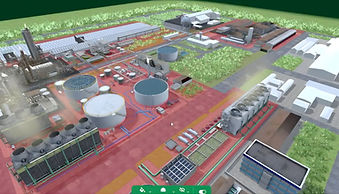
Integrate your OT Systems (PLC, SCADA, DCS) and Enterprise IT (ERP, SAP) into a 3D factory visualization. Monitor Overall Equipment Effectiveness (OEE) metrics in real-time.
Predictive Maintenance
AI predicts potential machine failures before they occur.
3D Layout Optimization
Simulate lane changes without disrupting operations.



Digital Twin Transformation Roadmap
Choose the implementation level that suits the maturity of your company's digital infrastructure.
Lvl. 1
Virtual Twin
-
Model 3D Interaktif (rotate, zoom, pan)
-
Material Modes (Solid, White, Transparent)
-
Asset Localization
-
Safety Zone Mapping (Penandaan bahaya)
-
Object Metadata (Klik info POI & spek)
Spatial awareness
Interaction
Lvl. 2
Connected Twin
-
Real-Time Data Monitoring
-
Analytics Dashboard
-
Alarm & Notification
-
Historical Data Logging
-
Role-based Access Control
-
Document Integration & Reporting
Real-time data
IoT Integration
Lvl. 3
Predictive Twin
-
Predictive Maintenance
-
Simulation / Relayouting
-
Task Management / Workflow Integration
Analytics
Decision-assist
Lvl. 4
Prescriptive Twin
-
Insight & Decision Support
-
Enterprise AI Assistant Integration
-
Scenario Simulation Engine
-
Multi-user Collaboration
-
Third System Integration
What-if simulation
Agentic AI
Lvl. 5
Intelligent Twin
-
Remote Control & Automation
-
Autonomous Operations
-
Advanced AI Optimizations
-
Self-optimizing Twin Logic
Autonomous action
Advanced AI
POPULAR

INTEGRATED ARCHITECTURE
How We Built It: End-to-End Data Flow
Seamless transformation from physical asset acquisition in the field to intelligent insights in the executive dashboard.

Optional: Only if needed
Optional: Only if needed
Optional: Only if needed
Optional: Only if needed
Sumber Data Fisik
Data acquisition from IoT Sensors, PLC/SCADA, drone/CCTV, Spatial (LiDAR), and Enterprise IT (ERP).
Model Digital
Development of virtual entities based on Point Cloud, Geospatial Model (GIS), and 3D Geometric (CAD/BIM).
Integrasi & Pipeline
Real-time data processing, data pipelining, and orchestration via MQTT, OPC UA, GraphQL, and REST APIs.
Aplikasi & Platform
Intelligent insight distribution to WebGL screens, Mobile/Desktop applications, and third-party system integrations.

Digital Twin
Transformation Roadmap
Make Molca your single operating system to orchestrate all your assets across sectors—from manufacturing production floors, mining/plantation operations, to building facilities management. Our platform is equipped with Data Governance infrastructure.
MQTT
OPC UA
REST API
GraphQL
WebGL
Application Layer (Cross-Industry)
Smart Factory OEE • Fleet Tracking • HSE Compliance • ESG Analytics
Delivery Channel
Web Based • Mobile Apps • Desktop • API Layer
Digital Twin Model Layer
Geometric (CAD/BIM) • Geospatial (GIS) • Kinematic • Behavioral

Molca Project Showreel
See how our digital replica, 3D mapping, and asset management technologies operate in real-time across a variety of industry sectors.
FAQ Digital Twin
Q: What needs to be prepared before implementing a Digital Twin?mentasi Digital Twin, apa saja yang perlu dipersiapkan sebelumnya?
Before implementing a Digital Twin, there are two key aspects to prepare: data and visuals. From the data side, ensure that your monitoring infrastructure is ready for integration. Ideally, all real-time data (from PLC, SCADA, DCS, or field sensors) should already be consolidated in a Data Warehouse and accessible via OpenAPI communication. If your integration system or supporting devices such as IoT Gateways are not yet available, Molca can assist in providing them through our hardware partners. From the visual side, data is needed to create 3D models of the areas or equipment that will become part of the Digital Twin. Data can be collected through photos, videos, drone mapping, or LiDAR scanning if high precision is required. In most cases, photo and video references are sufficient to build a representative 3D model.
Q: Where will the data be stored? Does it have to be in the cloud or can it be on-premise?
The Digital Twin system can run either on-premise or cloud-based, depending on your company’s IT needs and policies. We support both options; however, we recommend on-premise installation on your company’s internal server so that data security and access remain fully under your company’s standards and policies.
Q: How long does it take to develop a Digital Twin?
The development process usually takes 3–6 months, depending on the complexity of the area being implemented. During this period, the Molca team conducts needs analysis, system design, realistic 3D modeling, and data integration, followed by implementation and user training — ensuring that the final solution aligns perfectly with your operational needs.
Q: Can we add new features, areas, or assets to the Digital Twin in the future?
Absolutely. The Digital Twin is designed with a modular architecture, allowing phased development. This means new features, areas, or assets can be added later without needing to reconstruct the entire system.
Q: Can our internal team develop additional features, areas, or assets in the Digital Twin by themselves?
Technically, yes — but the Molca Digital Twin platform is built using specialized frameworks and tools (such as Unity, 3D Game Modeling, and Web Development) that require specific technical expertise. Therefore, most manufacturing clients typically need guidance or training before being able to develop independently. Molca provides upskilling programs and knowledge transfer sessions so your team can better understand the development workflow, enabling more efficient self-managed customization and expansion in the future.
Q: What is the difference between a Digital Twin and SCADA?
SCADA is designed primarily for control and operational purposes, while Digital Twin integrates data from SCADA for monitoring, simulation, and asset management — offering a more visual, analytical, and interactive approach to understanding and optimizing industrial operations.